
Fighting For Her
We were fighting on every front. The hospitals. The carers. The system. And sometimes each other’s exhaustion.

By Crystal Atlantis
This series is based on my personal lived experience and recollections, and drawn from documentation including formal complaints submitted at the time. Names of individual staff members and care agencies have been omitted to protect identities. This is not a legal document — it is a human one.
This is Article 5 of an ongoing series. If you haven’t read the previous articles yet, start from the beginning:
Article 1 — They Were Supposed to Care:

Article 2 — Calling It Out:
Article 3 — The Day Everything Changed:
Article 4 — Inside The System:
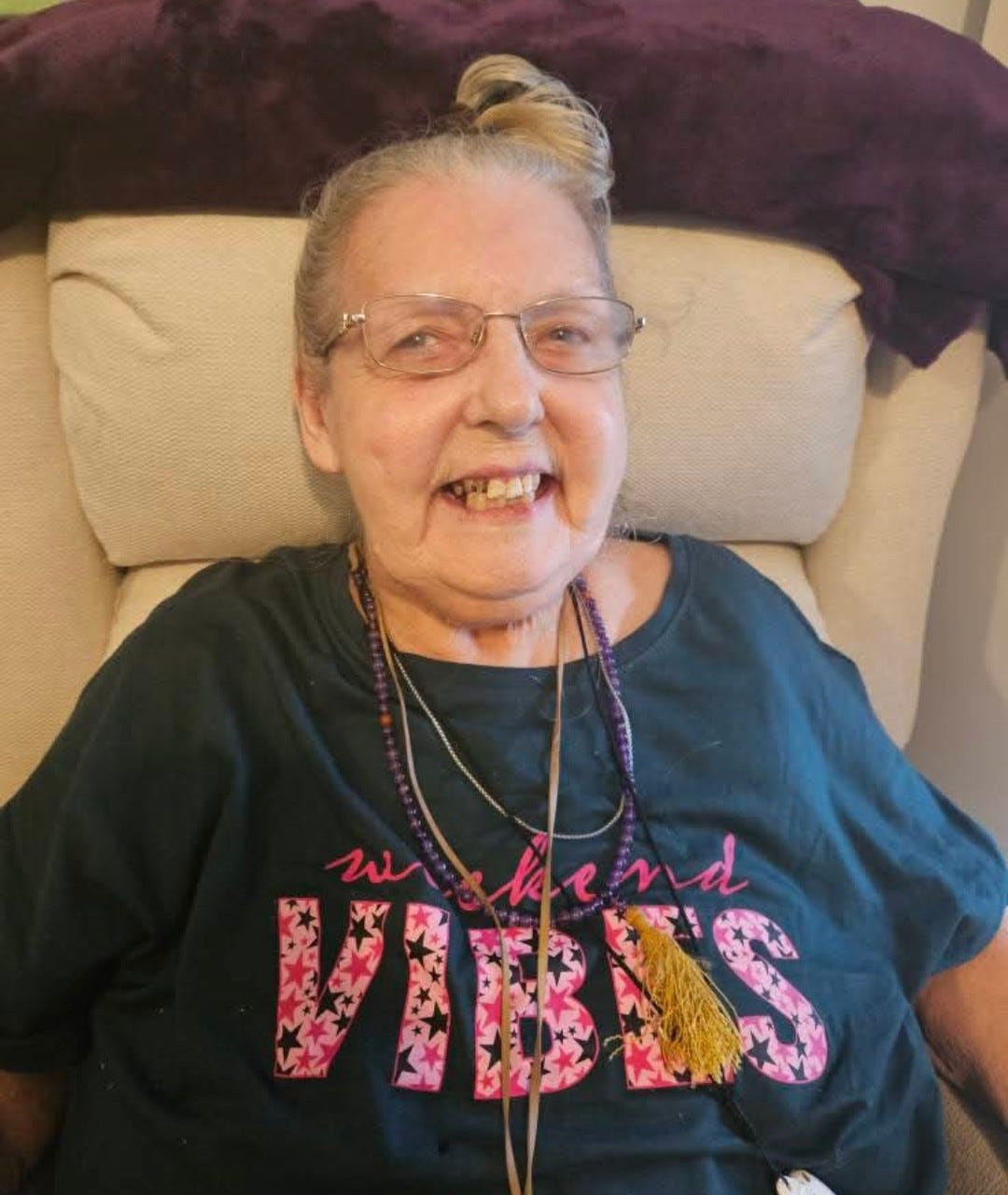
A Personal Note Before We Begin
This article has been the most difficult thing I have written so far.
It has taken me over a month.
The more I wrote, the more I remembered. The more I remembered, the more it grew. What I thought would be a few articles has evolved into something far bigger — almost as if it is writing itself.
It has taken me to emotional and mental places I wasn’t prepared for.
I had forgotten so much. But going back through everything — every voice message, every text, every complaint letter, every email — brought it all home. How much we had actually been through. How every ordinary, everyday thing became a mammoth task. How relentless it was.
It just didn’t stop.
And it has been a lot to sit with.
But within the process, it has also been healing.
“We were supposed to be holding her hand through the end of her life. Instead, we were fighting just to keep her safe inside her own home.”
The Mobility Scooter
Around this time, Mum got her mobility scooter.
She was so excited about it.
She was still holding onto hope. Still believing she might regain some independence, some movement, some normality.
Dad let her practise driving it around the flat first, but she kept bumping into the walls and became upset.
That ended up being the only time she ever used it.
I wish we’d taken her outside on it instead. Just once. Around the block. In the fresh air.
But we didn’t. And then the fall happened. And she never got the chance.
That is one of my biggest regrets.
After she became bedbound, she spoke about that scooter constantly.
All she wanted was to go out on it.
That part still breaks my heart.
The Second Care Agency
After the second hospital admission, we asked for different carers.
A new care package was put in place.
At first, we hoped things might improve.
They didn’t.
This was the agency that was there the day Mum fell.
The Fall
The carers were washing Mum in her rise and recline chair in the front room.
That is when she slid from the chair.
They did not prevent the fall. They didn’t catch her. They didn’t stop her. She slid to the floor.
She ended up buckled on her knees, her legs completely dead beneath her, unable to move.
There was blood from the sacral wound.
And then they left her there.
They wrapped her in a thick, fluffy dressing gown and tied it at the waist. Covered her with a fluffy blanket. Closed the curtains. Locked the door.
And left.
By closing the curtains and locking the door, nobody would have known she was there. No one passing by. No neighbour. No one. She was completely hidden.
To this day, I don’t know why they did that.
They had phoned me to let me know what had happened. I told them I couldn’t get there immediately.
I knew she’d had a fall. I was on my way. And I expected them to stay with her until I arrived.
They left anyway.
When I arrived, the curtains were closed. The door was locked.
I let myself in — and when I saw Mum, I panicked.
She was on the floor still buckled on her knees, propped upright, unable to straighten her legs or move herself. Bright red in the face. Screaming. Crying. Sweating. Overheating. Disoriented — she didn’t know what was happening. Shaking. Convulsing.
No wonder. Trapped on the floor. Tied up. Covered. Left.
There was blood present. That means you do not leave somebody alone.
I called the ambulance immediately. They came straight away. They had to use inflatable lifting cushions to get her off the floor.
It took a long time.
She never walked properly again after that.
What They Said Happened
We have documentation from this period.
According to their own statement, they called the ambulance and were advised not to move her. They say they supported her with cushions before leaving.
What they don’t mention — and what the photographs showed — was the blood.
Their response claimed no injuries had been observed. That it was difficult to determine when the bleeding started.
But the carers went into the bathroom to collect the wash equipment — the bowl, the flannels, everything they needed.
Mum’s underwear was on the bathroom floor. Covered in blood.
They would have seen it.
And they were washing her. Her sacral wound was in the area they were washing.
Either way — they knew.
We have the photos.
We know what we found when we got there.
The Mix-Up
After the fall, we knew we couldn’t continue with the second care agency.
We asked for a different provider.
The hospital told us which care agency would be taking over Mum’s care, and we felt hopeful. We’d looked them up, read about them, and believed Mum would finally be receiving the standard of care she deserved.
So when the new carers arrived, we assumed they were the agency we’d been expecting. The names were similar, and at first, nothing made us question it.
It was only later that we realised something wasn’t right.
The hospital had told us one agency would be coming.
An entirely different agency had turned up.
When we eventually realised the mistake, we looked them up.
They were a completely different company. Newly established, with very little history and no established track record. Nothing like the agency we believed had been arranged for Mum.
Whether the hospital had confused the two because of the similar names, or whether the referral changed somewhere along the way, I don’t know.
I only know that the agency we were expecting never arrived.
Instead, we found ourselves starting all over again with another unfamiliar company.
The Third Care Agency
At first, they seemed wonderful.
Attentive. Warm. Helpful.
After everything we’d been through, it felt like perhaps things were finally going to settle down.
The manager personally came down himself. Again and again. Please let me know if any of the carers do anything wrong. Let me know if you’re not happy with anything.
They brought in the best of the best. The cream of the crop.
We kept saying to each other — this is too good to be true.
You know that feeling when something seems almost too perfect?
We had it.
And usually, when something feels too good to be true, there’s a reason.
Sadly, there was.
Looking back, I understand why.
They were a brand new agency. They needed the contract. So in the beginning they went above and beyond.
But that didn’t last.
They changed all the carers over. And once they had, the cracks started to appear.
I did exactly what the manager had asked. I told him when things went wrong. Again and again. I complained a lot.
And the more I told him, the more difficult he became.
It began to feel as though the invitation to give feedback disappeared as soon as we started raising concerns.
And the way he spoke to his own carers — it wasn’t nice at all.
What followed were some of the most traumatic, distressing and exhausting months of the entire journey.
The Keys
Early on, we discovered that two members of the care team had taken Mum’s door keys.
They were the only set we had at the time.
It was only in the evening that I realised something was wrong about the keys — and they admitted they’d been sitting outside the back door all day. The agency was new and didn’t have much work, so they had nowhere to go.
I told Dad. And Dad challenged them on it — made them hand the keys back.
We didn’t report it. We probably should have. But we were exhausted — and if I’m honest, we didn’t want to get the carer into trouble either. Even after everything, that’s still who we were.
The Demands
Little by little, the atmosphere inside Mum’s home changed. Instead of feeling like a place of care, it began to feel like somewhere we dreaded walking into.
We hoped to avoid seeing the carers. Kerry and I used to joke about who had been lucky enough to swerve them.
For Kerry and me, the relationship with the carers became extremely difficult.
Dad seemed to get on fine with them. But for us, it was relentless.
They would bang on doors. Shout. Demand things. Shake medication bottles in our faces — we need this, we need this — aggressively, loudly, as if it was our fault.
The medication was a constant problem. They wouldn’t tell us when it was running low. They’d leave empty boxes behind without letting anyone know it had run out. And because Kerry and I weren’t the ones managing the medication directly, we genuinely didn’t know. So it would get to a weekend or a bank holiday, the medication would be gone, and Mum would need it and it was extremely difficult to get more.
When we tried to get help — phoning the palliative team, the district nurses, the doctors — they got really difficult about it too. They blamed us and reprimanded us, saying we should be keeping on top of the medication.
But we weren’t the ones administering it.
That was the care agency’s job.
Everyone pointed elsewhere. And it was Kerry and me who were caught in the middle of the chaos and the constant demands.
The carers would send us out for things — food, baby wipes, pads, supplies — and when we got back, we would find we already had the item they had been demanding.
Or they would say they needed something. Kerry would ask, is there anything else? They would say no. She would go out, come back, and then they would say they needed something else. One time she went out three or four times in a row because they kept saying no and then changing their minds.
It never stopped.
When we stayed over, we slept in the spare room. The carers came in early most mornings and would bang on the bedroom door. So we got into the habit of trying to get up before them, to shower before they arrived, to avoid it.
One morning I laid out absolutely everything Mum could need. Face cloths. The wash bowl. Toothpaste. Toothbrush. Hairbrush. Deodorant. Everything. All of it out, ready.
And I got in the shower.
They still bashed on the door so hard it scared me — I wasn’t expecting the loud banging and shouting. They demanded to come in. Even though I was in the shower.
I had to get out, wrap a towel around me, dripping wet, and let them in.
They pushed past me and went to get a spare toothbrush and toothpaste with no explanation.
When I challenged them, I pointed out that Mum’s toothbrush and toothpaste were already laid out. Everything was right there.
That was what it was like. A constant dread. The feeling that they would find any excuse to cause issues.
I still don’t fully understand what it was about.
Kerry and I were put on such high alert by these people that we became frightened of them in the end. We were scared of what they would do, what they would demand, what they would say, and how they would react.
Everything was so overwhelming and unnecessary.
I had a lot of meltdowns during this time.
Thank goodness we had each other to talk to and often rant to get things off our chests.
That is not how it should be.
Especially when your Mum is dying.
The Carer Who Raised Her Voice
There was one incident that particularly upset Mum.
We were made aware that a carer had raised her voice at Mum during a mealtime.
Mum was nearly blind by then. She couldn’t see her plate properly. She was doing her best.
We raised our concerns with the manager.
His response gave us pause.
He told us it was a serious allegation. That we needed to be sure before making it. That if we took it further, the carer could lose her job and never work in care again.
We didn’t want that.
And so, whether that was his intention or not, we felt we couldn’t take it any further.
Nothing was done about what had happened to Mum.
He then promised to come and observe the carer himself.
He was unable to attend due to traffic.
He never rearranged.
What Nobody Tells You
The catheter caused Mum significant problems throughout this period — and a great deal of it, in our view, came down to how it was being managed by the carers.
When Mum was still mobile, a catheter needs to be secured using a G-strap, fitted around the top of the thigh. This keeps the tube supported without pulling. The carers fitted it around the ankle. The tube was stretched taut — and at risk of being yanked out every time Mum moved.
When Mum became bedbound, a different problem emerged. The catheter was repeatedly positioned behind her pad instead of in front of it, meaning she was lying directly on the tube. When that happened, the urine couldn’t flow properly. Crystals would form inside the catheter that couldn’t be flushed out. Blockages developed. It caused Mum pain.
The palliative nurse stepped in. She ordered the G-straps herself and insisted the carers use them to keep the catheter in the correct position when Mum was bedbound.
The district nurses flagged it. The palliative care nurse flagged it. We flagged it. We raised it with the carers every single time we were told about a problem.
And it kept happening.
The same errors. Again and again. Despite being told. Despite the district nurse explaining exactly what needed to be done.
A catheter of the type Mum had is normally changed every ten to twelve weeks.
During this period, it was being changed daily.
On some occasions, twice in a day.
That tells you everything about how serious the blockages had become.
Her body was also beginning to shut down, which caused further complications — a build-up of sediment that added to the blockages. On some occasions, the district nurses suggested that Mum simply hadn’t been drinking enough. But getting Mum to drink was extremely difficult by this point. And beyond that, her body was failing. It wasn’t simply a matter of hydration.
The repeated blockages led to repeated UTIs. Painful, distressing, and avoidable.
The district nurses grew increasingly frustrated — not with Mum, though it sometimes felt that way to her — but with the situation. They were having to attend far more frequently than should ever have been necessary.
None of this was Mum’s fault.
Not one bit of it.
Nobody tells you about any of this before it happens. Nobody sits you down and explains catheters, poo charts, constipation, enemas and all that comes with caring for someone who is terminally ill. You don’t get a manual. You just get thrown in at the deep end and expected to manage — while also grieving, advocating, fighting, and trying to hold everything together.
Mum also suffered from chronic constipation throughout this period. Another thing nobody warns you about. It wasn’t occasional or manageable — it was ongoing and caused her real, significant pain. She would moan and cry with it. It was distressing to witness and distressing for her to endure. Mum had to have several enemas, which were unpleasant and undignified. Another layer of suffering on top of everything else she was already carrying.
Part of what made this harder was the locked app.
Every other care agency we had dealt with had shared Mum’s care records with us and with the relevant health professionals. Notes on medication. Bowel charts. Catheter records. Everything that mattered.
This agency recorded everything on the Birdie app — and the manager denied access to everyone. To us. To Kerry. To the palliative nurse. To the district nurses. To the GP. To the hospice.
Mum’s palliative nurse didn’t know how Mum’s bowels looked. She didn’t know the constipation had become as severe as it had. The district nurses didn’t have the full picture. The GP didn’t have the full picture. Nobody did.
Health professionals were trying to manage a seriously ill woman’s care without being able to see the records that should have been available to them.
It wasn’t just the morphine that was affected by those locked records.
It was everything.
By the end, the district nurses were having to come out far more frequently than they should ever have needed to. Some of them were horrible about it. Mum felt that.
And none of it was her fault.
The Manager
In the beginning, he was pleasant with me. But for some reason, he seemed to take an instant dislike to Kerry and spoke to her in a completely different way.
He would shout at her.
Really shout.
One day it spilled over into a group phone call. I joined towards the end and could hear him shouting down the phone at Kerry. She told me she was dealing with it and asked me to leave it.
That was the moment I realised just how differently he treated her.
Her relationship with him was nothing like mine.
Around the same time, the quality of the care changed dramatically.
Not gradually. Not slightly.
Dramatically.
The carers who had made us feel hopeful in those first few weeks disappeared. The people replacing them were different, and so was the care.
Everything became rushed. The warmth disappeared. The patience disappeared. The standard of care we had experienced at the beginning was no longer there.
When Kerry challenged the manager about how much things had deteriorated, the conversation became heated.
He told her that the extra attention Mum had received at the start had been a freebie. The reason? Mum was too slow. She took too long to get ready, too long to eat, too long to do anything. His staff were having to spend more time with her than expected, and they wanted a pay rise because of it.
So the attentive care at the beginning hadn’t been what Mum was entitled to. It had been given while the agency was establishing itself — and once that was no longer needed, it stopped.
That conversation has stayed with me.
It made us question whether the level of care we’d received at the start had ever been sustainable, or whether it had simply been there to secure the contract.
Then came another conversation that devastated Mum.
We were told some carers had complained that Mum was too slow.
Too slow eating.
Too slow moving.
Too slow to care for.
Kerry challenged that immediately.
She’s not too slow. She’s a dying woman.
When Mum heard about those comments, she apologised.
She apologised for being too slow.
As though she’d done something wrong.
She apologised for being too slow. As though dying had become an inconvenience to somebody else.
That has stayed with me ever since.
It wasn’t only Kerry who experienced the manager’s behaviour.
Even staff who were funding Mum’s care experienced him shouting at them.
It wasn’t an isolated incident.
It seemed to be part of how he dealt with people.
And for us, it became yet another battle in a journey that already had far too many.
The Morphine
At some point during this period, we became deeply concerned about Mum’s medication.
Oramorph is a controlled breakthrough medication. It is not meant to be administered on a schedule. The correct procedure is to ask the patient if they are in pain, ask if they want the medication, and then administer it if they do.
The carers were giving Mum 7.5ml four times a day. Without asking. Without checking. Just administering it routinely, regardless of whether she needed it or not.
At the same time, Mum had been prescribed furosemide by the doctor. She kept having reactions to medications that were being prescribed — things her body didn’t respond well to. She was also prone to urinary tract infections, which in seriously ill people can cause severe confusion and disorientation — symptoms so alarming they can look like sudden dementia.
So when it happened, nobody knew what they were looking at.
Mum became unresponsive.
Not just drowsy. Unresponsive. Comatosed. Twitching. Like she was having a fit.
She couldn’t speak. When she made any sound at all, it came out garbled. She couldn’t communicate.
We didn’t know what was wrong with her. We called the rapid response team.
They didn’t know what was wrong with her either.
And then I called everyone.
Because I believed we were about to lose her.
Kerry and her partner Chris came back from work in London. Gary came too. Dad. My aunties. Family members.
Everyone gathered. Everyone thought the same. She looked like she was dying. She sounded like she was dying.
We were all standing around Mum, not knowing what was happening.
And then the carers wheeled her in.
Like the queen.
Lively. Present. Completely transformed.
The relief was enormous. We had all genuinely thought she was dying. And there she was.
It was the most bizarre, heartbreaking, almost funny thing.
And I felt guilty. For calling everyone. For the panic. For dragging people back from work. For believing we were about to lose her.
But I had genuinely thought Mum was dying. Any one of us would have done the same.
What made it worse was what came after.
The amount of Oramorph being used raised concerns with Mum’s GP, the palliative care nurse, the district nurses and the hospice. Questions were being asked about whether her pain management needed reviewing.
One day the GP contacted me and was extremely abrupt. She questioned why Mum was using so much Oramorph and repeatedly reminded me that it was a breakthrough medication, not something that should simply be given routinely.
She seemed to think I was responsible.
I kept trying to explain that I wasn’t administering Mum’s medication.
The carers were.
They were the ones giving the Oramorph. Without following the agreed protocol. Without asking Mum whether she was in pain. Without asking whether she wanted it.
As a family, we did occasionally administer the Oramorph ourselves — but only when Mum asked for it. That is the correct procedure. She requested it. We gave it. That is how breakthrough medication is meant to work.
Looking back, we were left with serious concerns about the way Mum’s Oramorph was being administered. Whatever the cause of her episodes of unresponsiveness.
We lost precious time with Mum — not to death, but to absence — during some of the most important days we had left.
The palliative care nurse couldn’t access Mum’s medication records. They were locked on the care agency’s app system. A trained palliative care nurse trying to manage a dying woman’s pain could not see what medication Mum had been given or when.
She had to ask me.
She had to ask a family member what their dying relative had been given.
That is not a system.
That is a failure.
Documenting Everything
Somewhere along the way, we stopped being just daughters and became investigators.
We started recording staff names. Documenting incidents. Tracking medication. Comparing what one professional told us against what another had said. Preparing complaints while simultaneously trying to care for Mum.
It wasn’t something we planned. It evolved because it had to.
We had learned — through experience — that if we didn’t write it down, it didn’t exist. That if we didn’t push, nothing moved. That if we didn’t escalate, nothing changed.
The family became hypervigilant because trust had been broken too many times.
And underneath all of it — the phone calls, the letters, the documentation, the chasing — was a woman who simply wanted to feel safe.
Safe in her own home.
Safe in hospital when she had no choice but to be there.
Comfortable.
Cared for.
Treated with dignity.
We weren’t clinicians. We were daughters.
Yet somehow the responsibility kept finding its way back to us.
In Article 6 — I write about the last hospital admission, Mum refusing to go back, and everything that followed as fighting slowly gave way to simply being present.
If this has resonated with you — whether you are living through something similar now or carrying it long afterwards — you are not alone.
This series is documented and true.
Stay with it. There is a lot more to come.
Thank you for reading Mum’s story. It means more than I can say.
Tags: #callingitout #NHSfailures #cancercare #palliativecare #patientadvocacy #terminalillness #grief #speakingout #unheard #systemfailure #autisticwriter #carerexperiences #endoflifecare #familycarer #homecare #morphine